1
/
of
1
Puncture Needle
Puncture Needle
Couldn't load pickup availability
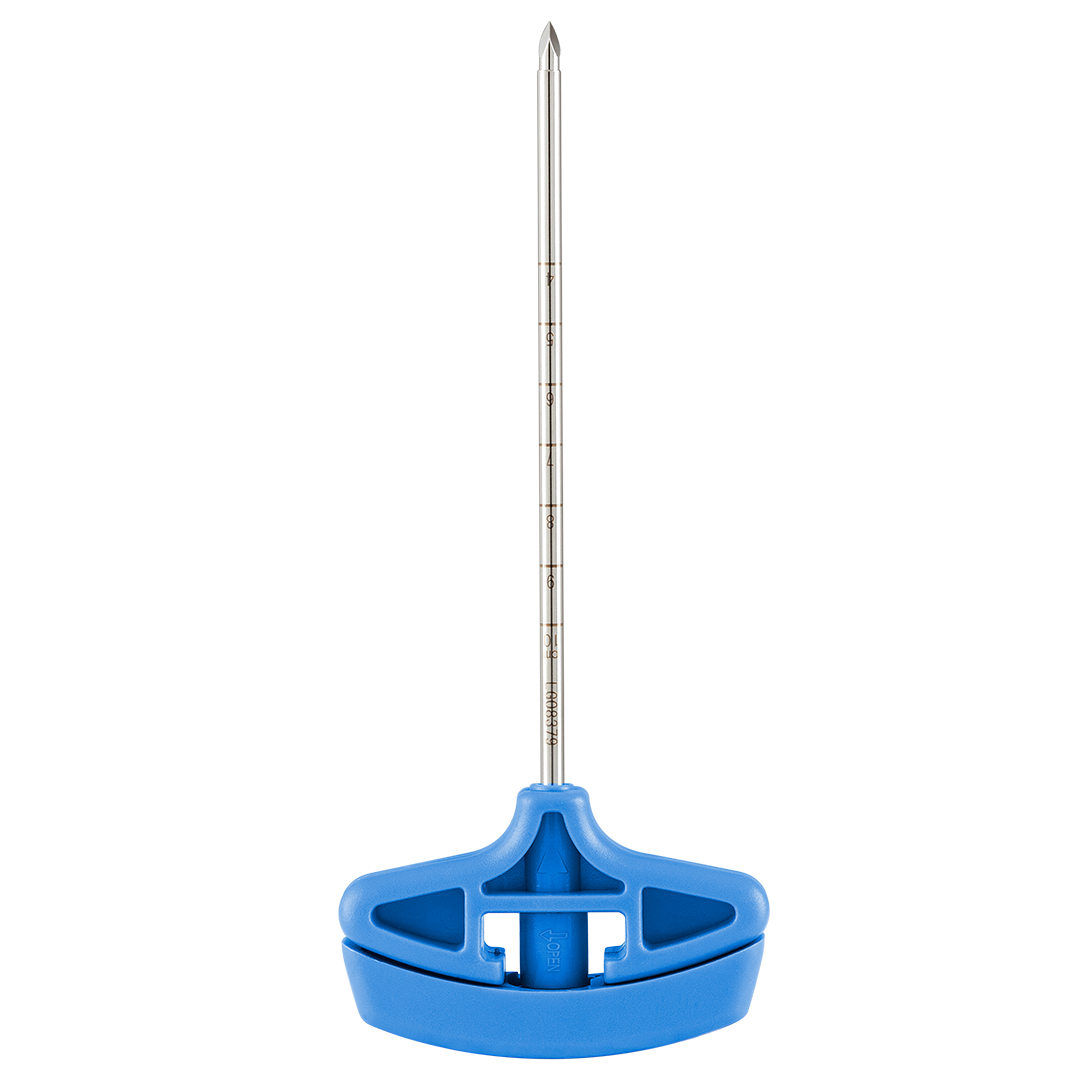
Disposable Puncture Needle Series
Application
This series of disposable puncture needles is designed as an essential tool for precise vertebral puncture during minimally invasive spinal surgeries. With diversified designs and integrated safety and hygiene features, these needles provide reliable clinical performance. They are primarily used for puncture positioning and establishing working channels in vertebroplasty procedures.
Product Features
• Ergonomic handle options
1. Locking handle: Prevents accidental slippage and stabilizes the operation.
2. Rotating handle: Allows flexible adjustment of the puncture angle.
3. Detachable handle: Facilitates convenient operation and improved visualization.
• Multiple needle tip configurations
1. Single-bevel: Enhanced tissue protection.
2. Double-bevel: Stronger penetration capability.
3. Triple-bevel: Maximized sharpness for smoother puncture.
• Wide specification range
1. Diameters: 2.5 mm – 4.0 mm
2. Lengths: 100 mm, 126 mm, 130 mm
• Suitable for diverse puncture approaches and depth requirements.
Clinical Use
The puncture needle can be used in combination with our vertebral augmentation surgical instruments or other vertebroplasty systems.
1. Insert the needle through the pedicle into the collapsed vertebral body.
2. Remove the stylet to establish the working channel.
3. Proceed with placement of subsequent instruments according to the operative plan.
Scope of Application
• Treatment of benign and malignant vertebral tumors
• Management of osteoporotic vertebral compression fractures
• Indicated for both percutaneous vertebroplasty (PVP) and percutaneous kyphoplasty (PKP)
Precautions
• Refer to the product insert for detailed instructions for use.
• Images are for reference only; actual product configuration may vary.
• Must be used in conjunction with acrylic bone cement.
Contraindications
• Patients with spinal infections (e.g., osteomyelitis, epidural cysts)
• Vertebral body collapse exceeding 70%
• Severe spinal cord compression or secondary spinal canal stenosis at the target level
• Posterior vertebral wall destruction or defect
• Severe cardiopulmonary dysfunction, coagulation disorders, sepsis, or other conditions that contraindicate surgery
Share